

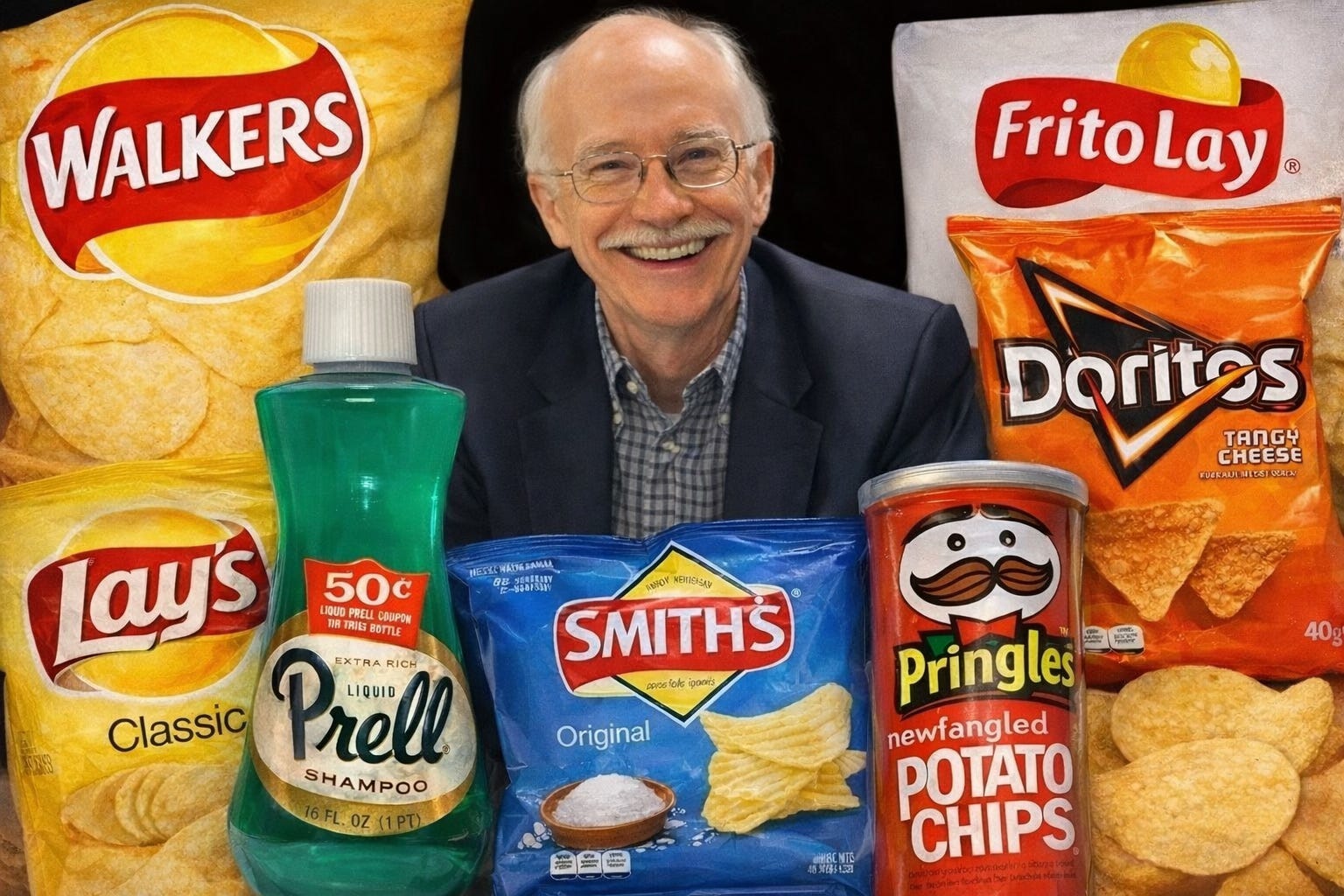
WE TEND TO THINK the allure of potato chips comes down to calories, reward, and “hyperpalatability.” Dick Reed—who spent a career designing and perfecting chips—thinks that misses the point. What snack foods really do, he argues, is compete with cooking by imitating cuisine, one engineered detail at a time. Warning: this interview is long, but if you’ve ever wondered how ultra-processed foods are created and why they are so successful, Reed offers an unusually candid tour of the system.
In this article, you’ll learn:
– Why Pringles are one of the snack-food industry’s biggest failures
– The science behind crunch, salt, oil, and oxidation
– Why most new flavours are doomed to fail
– How successful snack foods imitate cuisine
– Why the addiction narrative misses something fundamental
From shampoo bottles to potato chips
MARK SCHATZKER: How and when did your career begin?
DICK REED: About halfway through my first year in graduate school, this would have been around 1966, I signed up for an interview at Procter & Gamble in a field they called products research. It was in the “toilet goods” division—shampoos, toothpaste, antiperspirant, those kinds of things.
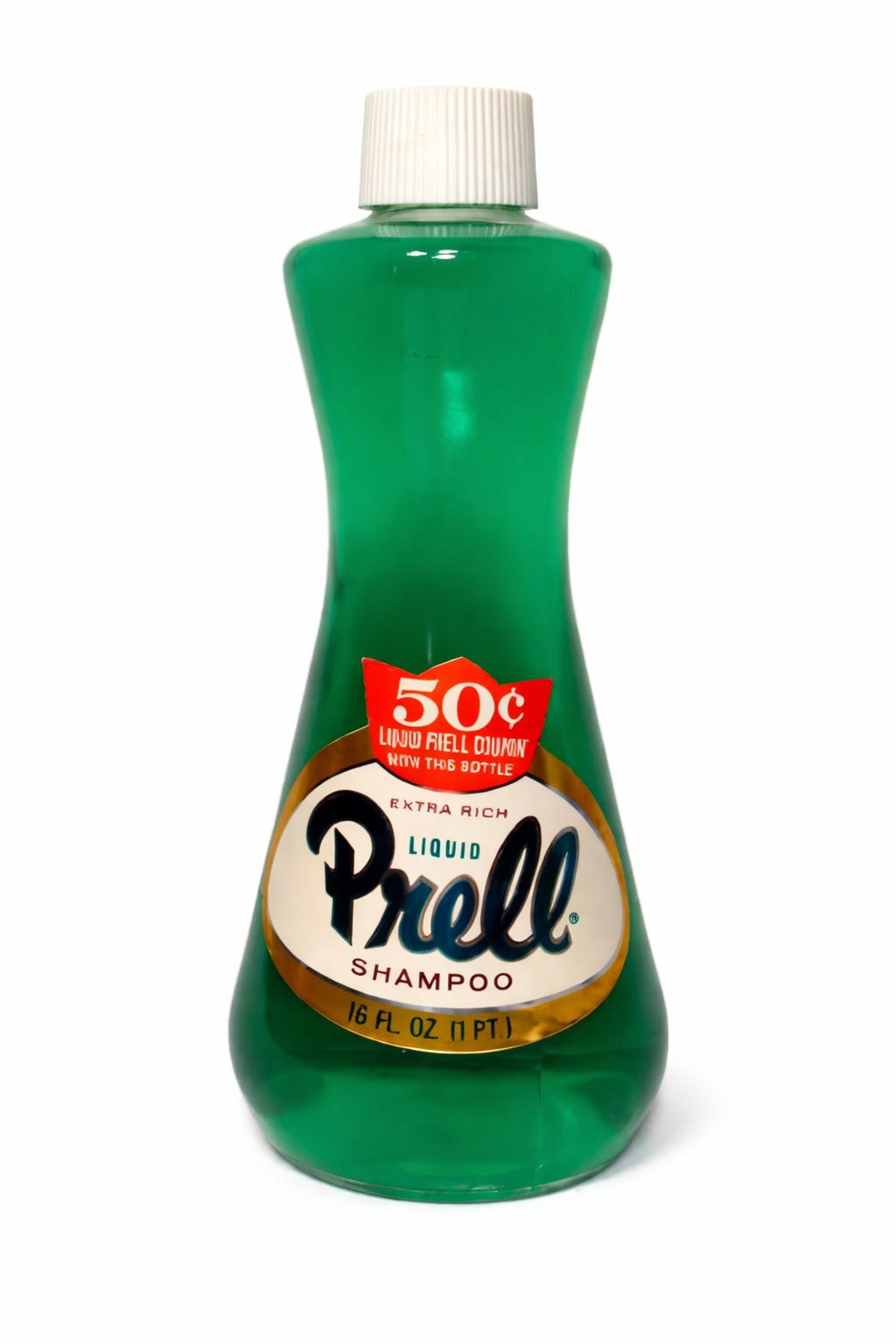
My first project was on a shampoo called Prell. Procter & Gamble was working on the introduction of a clear plastic bottle to replace the glass one. My job was to get that into test market and then rolled out nationally.
MARK SCHATZKER: What were some of the challenges in dealing with plastic versus glass?
DICK REED: Polyester bottles had bad barrier properties. You would lose a lot of perfume and other things that affected the quality of shampoo. And polyester wasn’t clear. Prell prided itself on being this bright green product that looked sparkly and beautiful to the consumer. Dow Chemical had just developed a clear PVC resin that could be used to make bottles. They wanted to capture a big market share, so they approached Procter & Gamble because it represented the number one opportunity.
This was a big-time deal, and I performed well on it. So they came to me one day and said, we have a job in our foods division rolling out a potato chip. That potato chip was Pringles.
MARK SCHATZKER: Why did Procter & Gamble decide to get into the potato chip business?
DICK REED: They already had a foods division. They had Crisco, Duncan Hines cake mixes, and Folgers coffee along with some other smaller brands. But these weren’t exciting businesses. They weren’t growing and they didn’t have the kinds of margins that Procter & Gamble was looking for. So they identified snack foods as a good area for growth, particularly potato chips.
MARK SCHATZKER: What was your job?
DICK REED: The job for the people in products research was to go out and find out who the market leaders were and then run chemical analyses on their products.
MARK SCHATZKER: Who were the market leaders at the time?
DICK REED: Lay’s was the number one brand. And there would have been Wise potato chips up in the northeast and Laura Scudder’s potato chips out on the West Coast.
MARK SCHATZKER: What kind of analyses would you do?
DICK REED: A lot of this happened before I got involved in the project. They were mainly interested in what was wrong with potato chips—the faults that people dislike. A lot of chips were broken. And consumers don’t like big ugly black spots on their potato chips. They don’t like it if they’re rancid or if they’re under or oversalted.
So they sat around and thought about how to fix these problems. The first idea was to put the chips in a can and flush them with nitrogen to stop the rancidity.
MARK SCHATZKER: How bad could a rancid potato chip taste?
DICK REED: Really quite bad. They were using different kinds of oils with no regard to the level of unsaturation or how they tasted.
MARK SCHATZKER: So potato chips had a short shelf life back then?
DICK REED: Oh, yeah. Two weeks, maybe.
MARK SCHATZKER: Did they look at anything besides flaws like black spots or rancidity?
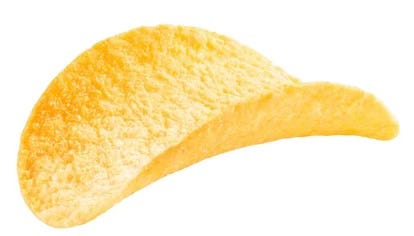
DICK REED: They put a lot of research into perfecting the shape of a potato chip. What they came up with is what they described in their patents as a “double saddle” chip.
MARK SCHATZKER: Like a Pringle.
DICK REED: Like a Pringle. At first, they tried to mould fresh slices of potato and then fry them. That turned out to be totally impractical. So they came up with the idea of sheeting, which is making a dough and putting it through rollers, the same way you make tortilla chips and crackers.
MARK SCHATZKER: What was the advantage of using dough rather than a slice of potato?
DICK REED: Because you can take the excess dough that doesn’t become a chip and recycle it back into the original mix. You can’t do that with leftover bits of potato.
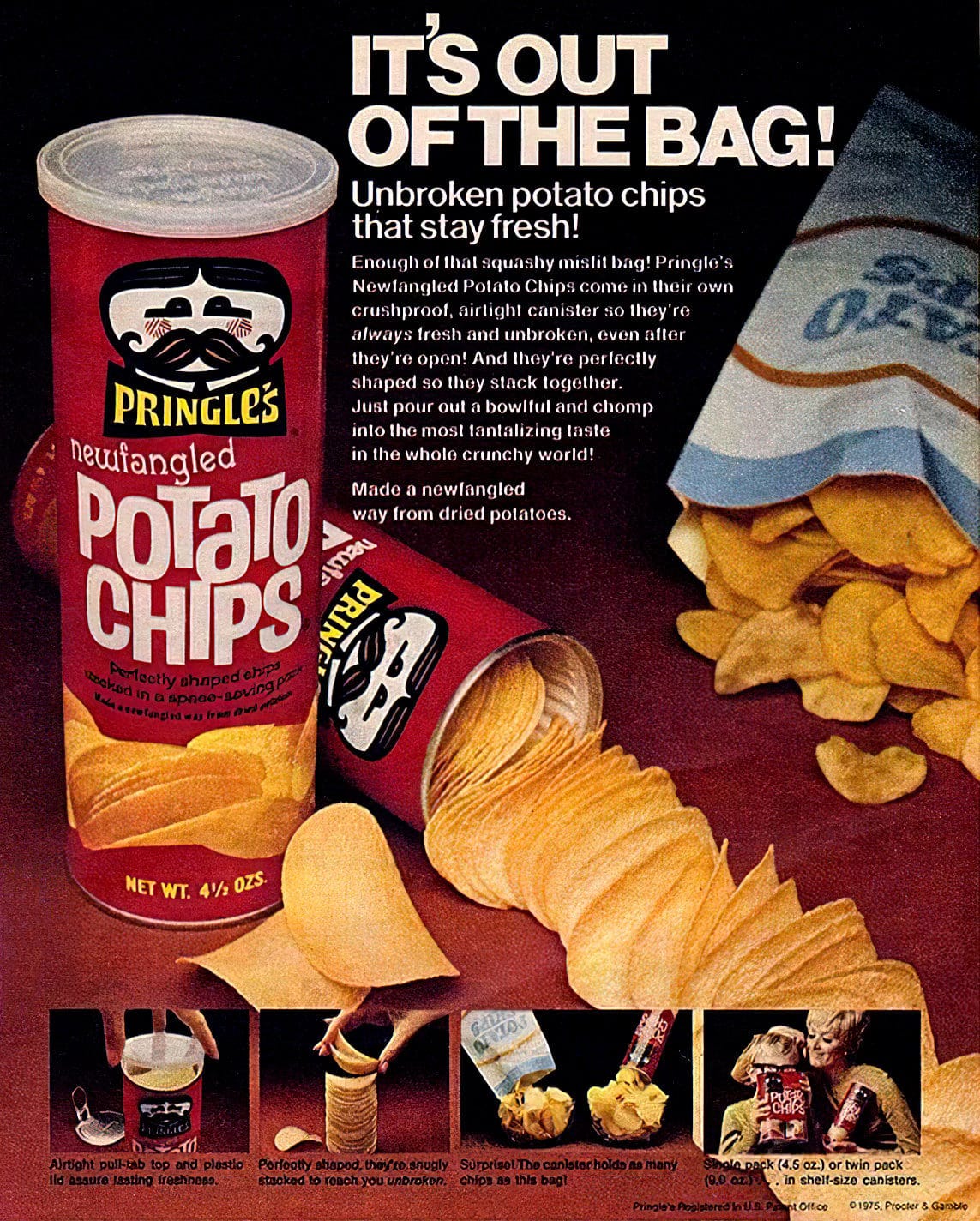
That double-saddle piece of dough would then be sent through a vat of frying oil, extracted, stacked, put in a can and then flushed with nitrogen. Then they’re on their way to market.
MARK SCHATZKER: And that’s Pringles.
DICK REED: By the time I came into it, they were already heading into test market. Procter & Gamble thought they were going to take over the potato chip world. They were planning to build two giant factories, one to feed the East Coast and one to feed the West Coast.
My job was to evaluate the consumer response.
MARK SCHATZKER: And how was that response?
DICK REED: They fell in love. It was like, Wow! This is the perfect potato chip. This is what I always dreamed of. They just wiped out the competition in every consumer test.
But you know how people talk about thinking outside the box? If there’s one thing that made me successful in my career, it’s that. The most important thing with a potato chip is how it tastes. So I got some really good potato chips and tested them against Pringles. And Pringles still beat them, but the difference wasn’t anywhere near as big. Then I said, let’s break them up. That way, you get rid of the shape recognition and the fact that every one of them is perfect. And when you run that test, the real potato chips have an edge over Pringles.
MARK SCHATZKER: Was there a big difference?
DICK REED: It was a huge difference. Think about potatoes for a moment. There’s baked potatoes, there’s boiled potatoes, there’s French fries, there’s hash browns, there’s potato chips. On and on. Each of them is distinctly different in flavour, and you can easily tell the difference when you eat it.
That’s all dependent on heat. What Maillard reactions are going on? What are the water levels within the chip? How long does the dehydration take? How much caramelization is occurring in the sugars?
Pringles are completely different. You boil them and mash them and then you dehydrate them. And the dehydration takes away some of the volatiles [flavour compounds] that potatoes have.
“I came in on a Friday and they told me I’d been reassigned back to the toilet goods division.”
MARK SCHATZKER: You’ve lost some of the potato flavour.
DICK REED: With Pringles, about 80 percent of the cooking is mash cooking, and the last 20 percent is fried cooking, which means it takes much less time to fry a Pringle compared to a regular potato chip. Maybe 20 or 25 seconds versus two or more minutes to fry a decent potato chip. That’s a big difference. That makes it taste different.
The data were saying Pringles were superior to good potato chips in most attributes. They did better in blind taste tests. But they lost on one very important property called potato chip flavour. And if people don’t get potato chip flavour, they aren’t totally satisfied. Especially people who are heavy potato chip users, and they’re the ones that eat the vast majority of potato chips.
MARK SCHATZKER: What did you do?
DICK REED: I explained to management that I thought there was a fundamental issue with Pringles that might need some attention before we go rushing massively into the marketplace.
MARK SCHATZKER: How was that received?
DICK REED: Badly. I came in on a Friday and they told me I’d been reassigned back to the toilet goods division.
MARK SCHATZKER: It’s like you were being disciplined.
DICK REED: Big time. They would have fired me if they could have. But I had a sponsor back in the packaging division, and he told me that if I got in trouble he would haul my ass out, and he did.
MARK SCHATZKER: Were you embarrassed? Angry? Humiliated?
DICK REED: All of those things.
MARK SCHATZKER: Did you have doubts? Were you sure you were right?
DICK REED: I wasn’t 100 percent sure. But I knew that the data were saying that these don’t taste like potato chips. They taste like something else. They taste like potato crackers or something. And when you eat Pringles today, they still taste that way.
MARK SCHATZKER: What ended up happening with Pringles?
DICK REED: They were successful at the start, because of the overwhelming initial appeal.
MARK SCHATZKER: It’s almost like that shape gives them a novelty factor.
DICK REED: It really is a perfect potato chip. If it just tasted like a potato chip, they would have owned the potato chip market. There’s no question.
But the enthusiasm didn’t last. They ended up becoming a niche product for light potato chip users. They never lived up to what Procter & Gamble was hoping for, which was for Pringles to become the brand leader by a significant margin.
MARK SCHATZKER: Was there ever a recognition that you were on to something? Did anyone say, Hey, it turns out you were right.
DICK REED: No.
MARK SCHATZKER: What did you do?
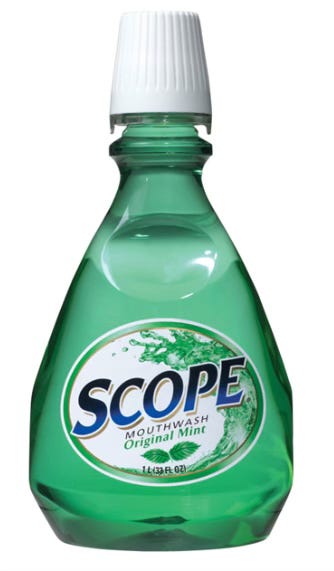
DICK REED: I went back into toilet goods packaging. I got the assignment to make the first crystal clear, non-cylindrical polyester bottle. We put Scope mouthwash in it, and that’s still the Scope mouthwash bottle today. It won Package of the Year.
I also put the first flip-top cap on toothpaste. And I developed a mechanism to accurately measure the detangling of hair.
Engineering the perfect potato chip
MARK SCHATZKER: How did you find your way back into the world of potato chips?
DICK REED: In the late 70s, Pepsi and Frito-Lay merged and that company became PepsiCo. Back then, Frito-Lay had very limited understanding of research and development. They had a few food scientists but no real concept of how you link stuff to what consumers care about. It was all opinion based. Procter & Gamble didn’t deal in opinion. They dealt in data.
Now, PepsiCo knew that Frito-Lay was backwards, so they hired a manager from Procter & Gamble to sort things out, and he offered me a job to set up a consumer-based R&D operation.
This was unknown at most food companies at the time, which were very primitive in comparison to Procter & Gamble in their ability to use technology to ignite consumer preference. They had a limited understanding of how to apply advanced statistics whereas I used advanced statistical approaches to tease out the impacts of variables using multivariable analysis. That was much more powerful than what most food scientists were aware of.
MARK SCHATZKER: How would your experiment have been different?
DICK REED: Let’s take a simple experiment like testing potato chips for the right level of salt. Historically, somebody just guessed about how salty potato chips should be and then would see if the consumer liked it.
The right way to do that test is to run at least five variables in a paired test of salt levels. Each consumer gets two pairings, but the panel as a whole gets five levels of salt. You don’t ask them which they like better, you ask which has the preferred level of salt based on a number scale. Then you put those numbers into a multivariable statistical analysis program, and it’ll draw a curve with a probability ranking around it that shows you where the optimum is, which may be in between the levels of samples you actually tested.
MARK SCHATZKER: So you might give them five levels of salt: 1, 2, 3, 4, 5. And it turns out the preferred level is 3.5, which is a level no one actually sampled, but your statistics say, this is where the optimum is.
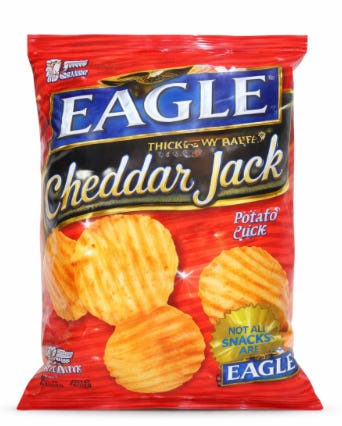
DICK REED: Exactly. Now, in 1982, Anheuser-Busch decided they want to go into the potato chip business. As the largest beer company in the country, they had a delivery system that put them in grocery stores and gas stations and convenience stores everywhere.
MARK SCHATZKER: They had a great distribution network.
DICK REED: That was also Frito-Lay’s main advantage at the time. It didn’t matter where you go in the United States, you could get Frito-Lay chips and Budweiser beer.
Frito-Lay now had a direct competitor in terms of distribution capability. So my boss says to me, let’s test Frito-Lay potato chips against this new Eagle brand potato chips.
MARK SCHATZKER: Eagle was the new Anheuser-Busch brand?
DICK REED: Yes. So I test Eagle chips against Frito-Lay and Eagle beat Lay’s something like 70 to 30. I was expecting that this was going to be like a nuclear explosion. At Procter & Gamble, if you are the number one brand and you lose to your competitor 70 to 30, it would have been All hands on deck, we’re going to solve this problem and solve it now!
That’s how my boss reacted. But then he took it to his boss, the head of Frito-Lay, and he said, “Oh, don’t worry too much about it. We don’t expect Lay’s to have the best quality. It’s all about distribution. Beer and snack foods have different bulk densities, so the Anheuser-Busch trucks can’t really carry snacks.”
We ran the test every couple of years, and the results always turned out the same. Eagle beat the hell out of us.
“I don’t give a fuck about Doritos. I want to know what we’re going to do about Lay’s.”
MARK SCHATZKER: Do you remember what they were beating you on? Was it salt level? Crunch? Rancidity?
DICK REED: All of those things. Lay’s was a mediocre chip back then. It was the biggest brand, but there were other local brands that were better. But Frito-Lay didn’t really care because they made their money in Doritos.
So, anyway. I’d been working at Frito-Lay for about eight years when the brand started getting a little bit stagnant. By this point, Doritos had been fully exploited, Lay’s was losing market share—that kind of thing. So, PepsiCo assigned a guy named Roger Enrico to come to Frito-Lay. Do you know who Roger Enrico is?
MARK SCHATZKER: I do not.
DICK REED: Roger Enrico was the guy that developed the Pepsi Challenge, which was the first thing that Pepsi had ever been able to do against Coke that got them into the big boy game.
So Roger Enrico came to Frito-Lay. He started having meetings and he would say, “What are you going to do about Frito-Lay?” Everybody said, What do you mean? And he says, “Let me be clear. Lay’s is our number one brand. We can’t afford to have Anheuser-Busch chewing at our ass. What are we going to do about it?”
About a month later, we had another meeting, mainly led by the marketing department. They came in and they started describing how they were going to use Doritos to attack Anheuser-Busch. I still remember it. Roger Enrico said, “I don’t give a fuck about Doritos. I want to know what we’re going to do about Lay’s.” Everybody got the message.
So, they put together a task force and went off to figure out how to improve Lay’s. But when they came back, they could get the quality a little better, but they couldn’t get it anywhere close to beating Anheuser-Busch.
One day, my boss came to me and he said, “I want you to take over this potato chip effort. I need somebody that can figure this shit out.” So, I went to work on it. I knew how to study things. I knew how you could deploy high-end chemistry to understand what was going on. I said, let’s study the oils. Let’s do experiments on how thick a chip should be. There was no knowledge on how to control a fryer. At the time, moisture metres were just coming online, which could measure the final moisture level in potato chips.
MARK SCHATZKER: What did you find?
DICK REED: A lot. Rancidity was a big problem. We didn’t even have decent packaging films. Shelf life was thirty-five days. The chips were deeply rancid at thirty-five days.
MARK SCHATZKER: Do you think it’s because rancid oils are by their nature unhealthy?
DICK REED: I think the human sensory system is highly tuned to keep people healthy. The sensory system of all animals is designed to protect them and nourish them. If you’re in the business of selling food to people, you want to understand that.
MARK SCHATZKER: What kind of changes did you make?
DICK REED: We switched to using cottonseed oil.
MARK SCHATZKER: Why cottonseed oil?
DICK REED: We didn’t want to use hydrogenated soy anymore, because people were beginning to understand that hydrogenated oils were not healthy. And we ran a consumer test that showed that hydrogenated soy was not anywhere near as preferred as cottonseed.
MARK SCHATZKER: Did that fix the rancidity issue?
DICK REED: We also added nitrogen flushing to all of the lines. And we developed a film for the packaging.
MARK SCHATZKER: What did the film do?
DICK REED: It addressed three major problems: moisture, light and oxygen. If you put nitrogen in the bag, you still have to keep oxygen out. You have to keep the sunlight out, because that accelerates oxidation [rancidity]. And you have to keep moisture out because any kind of moisture causes the product to go stale and you lose crispness.
At the time, you could get high quality films that were essentially a layer of foil, but those were very expensive. We started using a new technology where you have an electrode that atomizes aluminum in a vacuum and deposits it on a thin layer of plastic, creating a high barrier film. It was packaging film suppliers that developed it, but Frito-Lay created the demand for it and then worked with these suppliers to produce it.
MARK SCHATZKER: Is that why when you open a bag of chips today the interior looks silver, like tin foil, but still feels like plastic?
DICK REED: Yes.
MARK SCHATZKER: How about salt levels? What did your statistical analysis tell you?
DICK REED: Frito-Lay had been using 2.2 percent, and we lowered that to 1.8 percent.
MARK SCHATZKER: What about the basic recipe for making chips? Did that change?
DICK REED: One of the biggest changes was fry time. Frito-Lay had been pushing their fryers way too hard—the temperature was too high, and the fry time was too short. That impaired the texture and the flavour development.
A raw potato slice has living cells that contain starch structures, proteins spread around in mitochondria, sugars supplying energy, and other things that are part of the cells. If you throw that slice into an extremely hot vat, it’s almost like an explosion. The starches are in filaments that are flying out almost like cotton candy, and they’re dehydrated. What you see is just a total loss of structure.
If you fry that slice at a much lower temperature for eight minutes, on the other hand, and you cut a cross section and look at it under a microscope, the cells are pretty much intact, like little bricks. The starch has been cooked inside the cells and it forms a gel that is then dehydrated, so it has a very strong physical structure. Those chips are very hard.
MARK SCHATZKER: Is there a sweet spot?
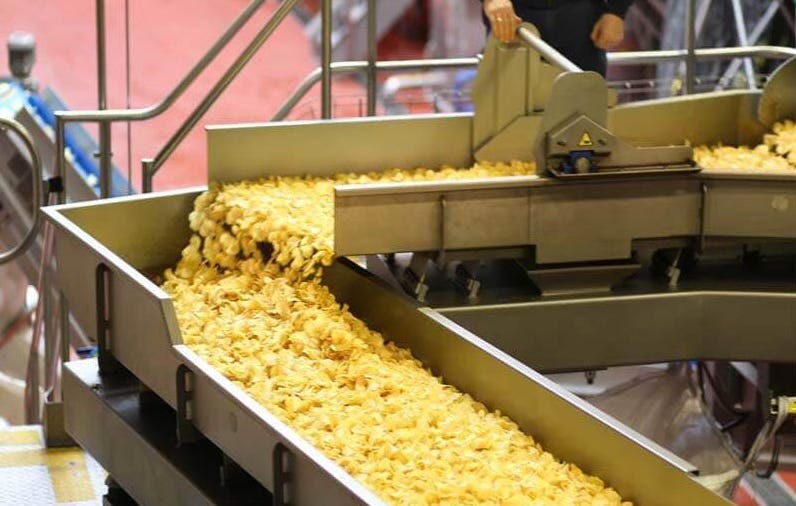
DICK REED: I don’t know what the true optimum is because we had to keep production moving at a certain level. Most of our fryers were rated at 5,000 pounds-per-hour, but they were producing 8,000 or 9,000 pounds per hour. The company could afford to pull it back to 5,000 pounds per hour. But there was no way you could go down to 3,000 pounds per hour.
I also knew that Anheuser-Busch wasn’t frying super long. We did some experiments and settled on a two-minute fry.
MARK SCHATZKER: So, the fry time almost doubled. What was the result?
DICK REED: It added substantial crunch. You didn’t have this candyfloss feel anymore. That was one area where Anheuser-Busch was continually beating us.
We also tested the moisture level of the chips after they had been fried, which is something that had never really been done before. We discovered that the level of moisture in the potato slice determines a lot: the degree of dehydration, how far you’re driving the Maillard reactions, and the degree of caramelization that is occurring in the sugars—bitterness is the last stage of caramelization, and you cannot afford to have much bitterness.
The bottom line is that your fried potato chip must have a certain amount of moisture. You have this flow of wet potatoes going in, and some have more moisture than others, so you have to measure that and control the fry time accordingly. It turned out to be remarkably complicated.
MARK SCHATZKER: How do you get a huge company like Frito-Lay to change the way it fries its chips?
DICK REED: That was another major issue. We had thirty-three plants, some with two fryers. Each plant ran three shifts, and each shift had a different fryer operator. So essentially you have this massive company whose product was controlled by a bunch of hourly workers who all did whatever they wanted. We had to get control of these fryers.
MARK SCHATZKER: Was that hard?
DICK REED: There was this guy that had been with the company for around forty-five years who was something like the fryer guru. He visited each plant every year and audited their fryers and the fryer operators. It was a semi-corrupt kind of deal. He liked to play golf. If you wanted to have the audit go easy, you would take him out to dinner the night before, give him a quick tour of the factory, and then ask him if he’d like to play the best golf course in town. That’s how you got a good report.
Needless to say, he wanted nothing to do with what I was doing. So I had to have a discussion with him and tell him we needed to retrain all these guys at the factories. I had to tell him it’s my way or the highway.
MARK SCHATZKER: You had to implement all this—the nitrogen, the new packaging film, the new salt level, the longer fry time, measuring moisture levels at all thirty-three plants.
DICK REED: And we had to reduce the amount of potato defects. And our peeling standards were poor.
MARK SCHATZKER: What was the result?
DICK REED: The result is we smashed Anheuser-Busch. Within two years, they were dead in the water.
MARK SCHATZKER: What happened to Eagle potato chips?
DICK REED: They eventually sold it.
MARK SCHATZKER: So, the quality of Lay’s chips improved to the point that consumers noticed it and Lay’s ate up Eagle’s market share because people preferred Lay’s?
DICK REED: Yes.
MARK SCHATZKER: Did they give you a bonus?
DICK REED: They gave me promotions. The way it works in these big companies is when you get more senior, your salary goes up. But what really goes up is the amount of stock options you get.
MARK SCHATZKER: And that’s where the wealth is.
DICK REED: The only way you make money is if the stock grows.
Fixing crisps
MARK SCHATZKER: What happened next?
DICK REED: PepsiCo was getting real excited about the snack food business now. They had plans to grow overseas. So, I’m sitting at my desk and I get a call to go in and visit with Roger Enrico. He says, “Dick, we just bought the biggest potato chip company in England. I want you to go take a look at it and tell me what you think.”
MARK SCHATZKER: What was the name of that brand?
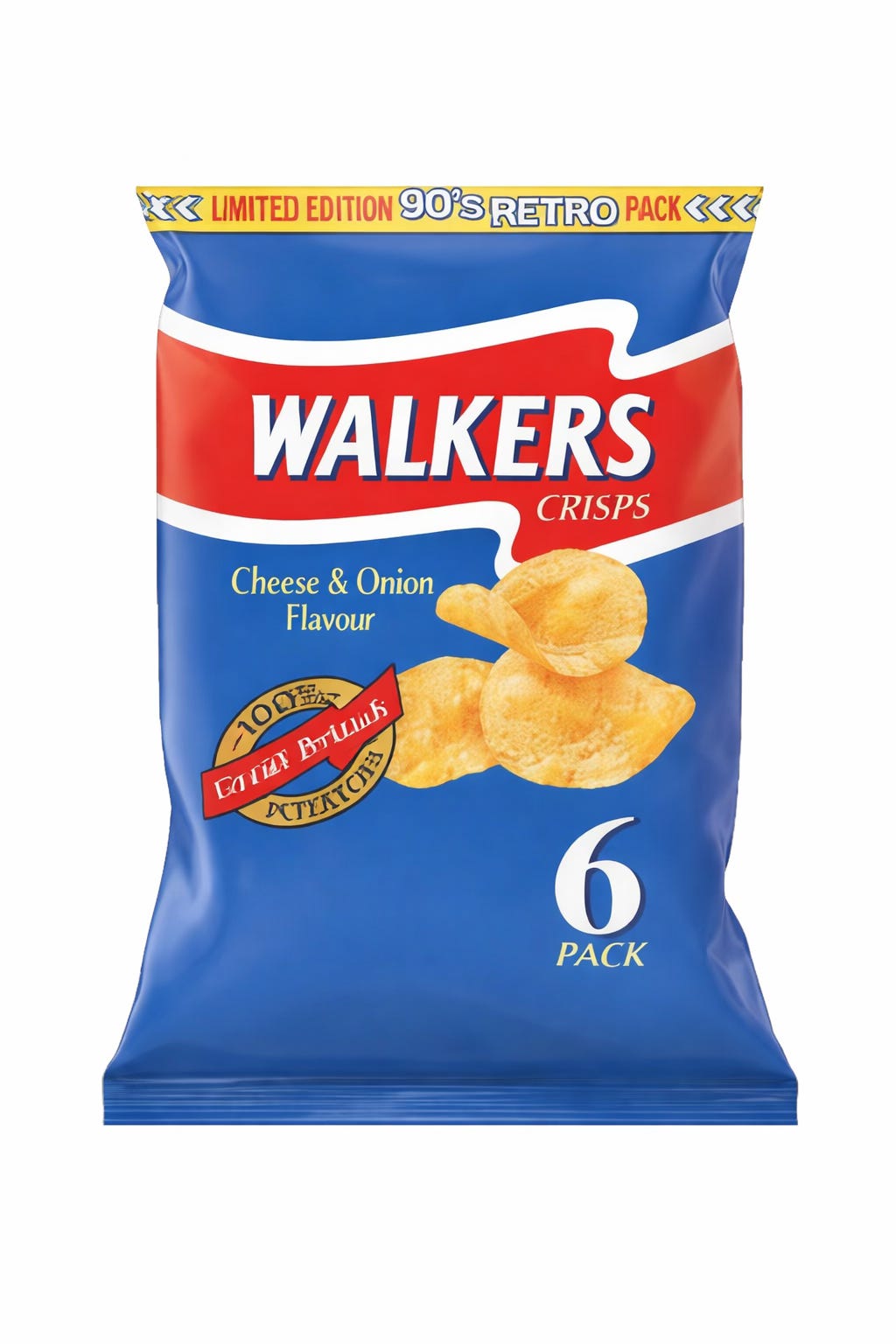
DICK REED: Walkers. So I go over and do a review and I come back and tell Roger they don’t have a clue what they’re doing. A month later, I get called and told Roger wants you to go to England and become R&D director of Walkers. If you do a good job, there’s potential for you to become R&D vice president for Frito-Lay for Europe, Middle East and Africa.
When I got ready to go, Roger said, “Oh, one other thing. We tried Doritos a couple of times in England, and it’s always failed. Why don’t you figure out how to make Doritos a success over there while you’re at it.”
So I went to England and I lived there for ten years.
MARK SCHATZKER: Where did you live?
DICK REED: In Leicestershire. That’s where Walkers was headquartered. But Frito-Lay also bought another brand called Smith’s, and it was headquartered in Reading. So I ended up having a satellite office in Reading, but my home base was in Leicestershire.
MARK SCHATZKER: What did you do to fix their problems?
DICK REED: I reprised the whole deal with Walkers that I’d already done with Frito-Lay. And it was highly successful.
MARK SCHATZKER: You implemented the two-minute fry time, packaging in nitrogen and all that?
DICK REED: I automated packaging systems. I got rid of the defects. I didn’t change the seasonings. It was a huge success.
MARK SCHATZKER: Did you get the promotion they promised?
DICK REED: Yes. And now it was time to turn our attention to Doritos.
MARK SCHATZKER: Can you tell me a little bit about how Doritos failed? Did Frito-Lay introduce them in England and consumers just didn’t take to them?
DICK REED: Yes. I spent a lot of time thinking about Doritos. I found myself very interested in what people eat and why they eat it. The number one selling flavour by a wide majority in the United States was Nacho Cheese.
MARK SCHATZKER: That wasn’t the original flavoured Dorito. The original was Taco, but it seems to have faded away.
DICK REED: There’s a reason for that. Taco wasn’t a well-blended seasoning.
MARK SCHATZKER: What do you mean by that?
DICK REED: It’s a cooking kind of term. I like to cook. I really like a Béarnaise sauce. If you study what a Béarnaise sauce is, it’s a weird thing. You take wine and vinegar and tarragon, and you cook them with some shallot and then you blend it with an egg yolk and butter. And it turns into this marvelous blend of flavours and textures and aromas. It’s well blended. The French are phenomenal at doing this.
The original taco seasoning, it’s like somebody said, why don’t you make a taco seasoning without really considering what the essence of a really good taco might be.
MARK SCHATZKER: It was also Frito-Lay’s first attempt at a flavoured tortilla chip. Maybe they didn’t know what they were doing?
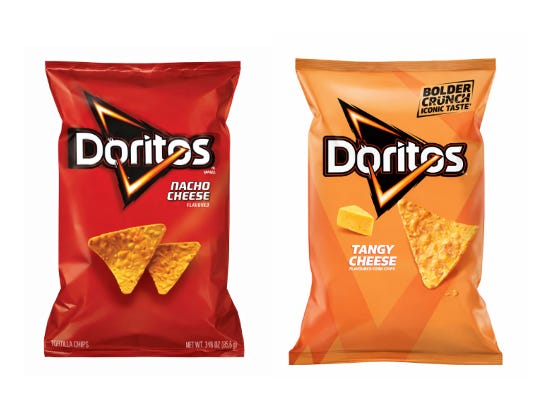
DICK REED: It was a different story with Nacho. But just exactly what the hell is Nacho? I talked to the people at Frito-Lay about what went into creating Nacho Cheese Doritos.
It was developed by McCormick. We were one of their best customers. If you’re buying millions of tons of this stuff, they’ll explain to you exactly what goes in it. The three main ingredients are cheese powder, tomato powder and garlic powder.
I called it CTG—cheese, tomato, garlic. And I got to thinking, what else is mainly cheese, tomato, and garlic? Pizza. And pizza is popular everywhere. Spaghetti, too. A good blend of cheese, tomato and garlic is magic.
I decided not to mess around with any other seasoning. I thought it must be Nacho. So, I asked the team why Nacho Cheese didn’t work, and they got back to me and said people think it’s Mexican, but Mexican food is supposed to be hot. And nacho isn’t hot. So, they rejected it.
MARK SCHATZKER: That’s exactly what happened with original Doritos, which were just salted. People said they sounded Mexican but didn’t taste Mexican. That’s why they created the taco seasoning.
DICK REED: We changed the name to tangy cheese instead of nacho cheese. And we didn’t call them tortilla chips anymore, because tortilla has a Mexican ring. We called them corn chips. So now we were selling tangy cheese, which sounds English, and they were corn chips, which doesn’t sound Mexican.
MARK SCHATZKER: Did it work?
DICK REED: It was a huge success. And with that, we had formulas for how to get the two major things that were important to Frito-Lay—Doritos for high margins and potato chips for volume—introduced in all the countries in Europe, the Middle East, and Africa. And we went about doing just that.
Are snack foods more like drugs—or dinner?
MARK SCHATZKER: I want to talk to you now about the deeper reasons these foods are so popular. The scientists who do research in this area take a variety of approaches, but most of them tend to focus on the calories.
One view is that energy density is a major player. Humans are attracted to densely caloric foods, and those foods have a tendency to make people put on weight. Another view is that it comes down to what’s called flavour-nutrient learning. Basically, your brain registers the flavour of a potato chip in your mouth and then matches the flavour up with calories sensed in the gut. So the reason people like potato chips, no matter what the flavour, is because of all those calories.
Finally, there is a concept called “hyperpalatability” which says that humans are particularly drawn to combinations like sugar and fat, carbohydrate and salt, or fat and salt. These combinations trigger elevated reward and rapid, high-momentum eating.
Generally speaking, science tends to see the calories as the driver of potato-chip eating, and the flavour is just along for the ride.
DICK REED: I have no doubt that some of these kinds of combinations make for products that humans are drawn to. But that on its own isn’t enough to make a product a winner in the market.
If you just take a basic salted potato chip, the quality comes down to how carefully you cook it and how carefully you design it. There’s an ideal slice thickness. There’s an ideal moisture level. There’s an ideal cook time. There’s an ideal oil for frying. There’s the right amount of salt—all the things we have been discussing. They have to be just right if you want to be the best.
MARK SCHATZKER: So it’s more complicated than just delivering calories. What about flavoured potato chips—does any flavour work?
DICK REED: You need to tap into flavours people really like. Think about baked potatoes. You go to a restaurant, and they top a baked potato with sour cream and cheese. Well, you’re eating the same kinds of flavours when you have a sour cream ’n onion potato chip. The sourness and the creaminess of the sour cream, the cheese flavour, and the underlying potato flavour. If you do a good job of blending those, it becomes very attractive.
“You’re competing with cooking. Does it need a little heat? Does it need a little bitterness?”
MARK SCHATZKER: Would you say the flavour needs to resemble an already existing food or dish?
DICK REED: If people are starving, they’ll eat anything. But when people aren’t starving—which is the culture we’re talking about—their preference, what they already like, are incredibly important to success. It’s a very hard slog to get people to like something brand new.
MARK SCHATZKER: Beyond that, was there any kind of formula or pattern for what made a flavour successful? Or was it whatever worked?
DICK REED: I don’t think it’s as simple as a formula. My view is that to be really successful, a flavour has to have a fair amount of complexity. You need to have at least three main flavour ingredients. Like I told you with Nacho Cheese: cheese, tomato, garlic.
MARK SCHATZKER: It’s as though they’re imitating something like a composed dish. It’s about evoking a richer experience.
DICK REED: You’re competing with cooking. Does it need a little heat? Does it need a little bitterness?
MARK SCHATZKER: Is this universal—does it work this way in every country?
DICK REED: So far as I can tell.
MARK SCHATZKER: So you can’t just put any old flavour on a potato chip and it’ll be popular?
DICK REED: No. That sort of thing is always driven by marketing. The company wants to sell more, so the marketing department has to come up with some proposal for how they’re going to sell X percent more, and a new flavour is always an easy one. I fought against that as much as I could because it’s a zero-sum game long term.
MARK SCHATZKER: The new flavours end up failing?
DICK REED: They don’t fail in the sense that nobody ever buys them. They give you a little bump and then they disappear. You try it again the next year, and it won’t be as good as the previous year. You’re trying to grow your business on something that runs out on you.
MARK SCHATZKER: Are new flavours ever successful?
DICK REED: There is the potential that somewhere along the line you find a new flavour that’s got lasting appeal, like Cool Ranch Doritos.
MARK SCHATZKER: That was just kind of a one-off marketing exercise that happened to hit paydirt?
DICK REED: As far as I know. I wasn’t the R&D manager, so I can’t say.
MARK SCHATZKER: When you were managing Africa and the Middle East, did you ever introduce a flavour that was specific to that culture?
DICK REED: In South Africa, they had Biltong flavoured potato chips. [Biltong is a form of air-dried, cured meat.] That wouldn’t work anywhere else, because people wouldn’t know what Biltong is. But when you really looked, it was just a potato chip with meat and smoke flavouring. That could easily work as a barbecue chip someplace else.
MARK SCHATZKER: Did you ever try to develop a flavour you thought would work that didn’t?
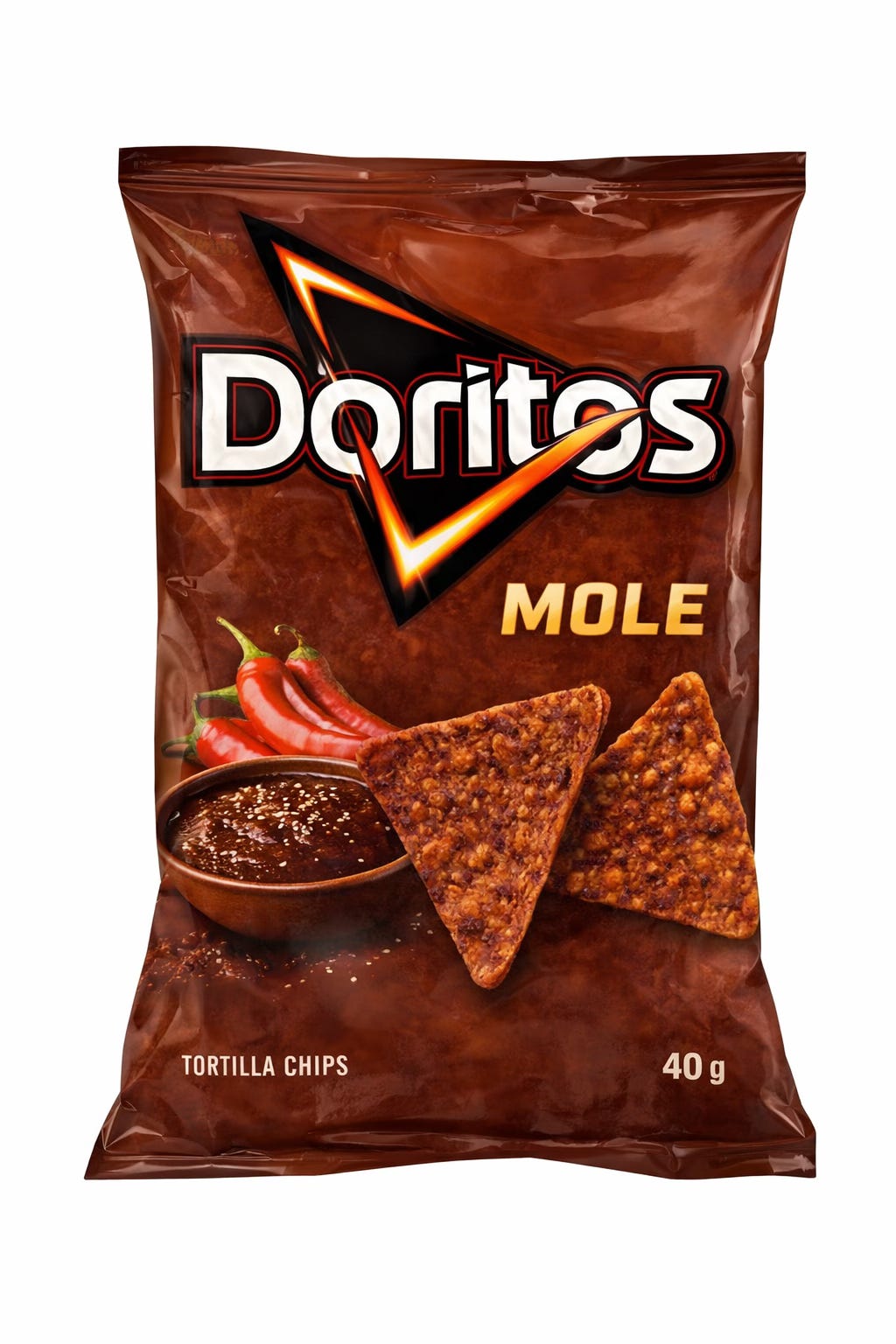
DICK REED: I tried to develop a Mexican mole seasoning, because one of the flavours in mole is chocolate, which is tremendously powerful. I thought that if I could find a mole seasoning for Doritos that really worked, it would be dynamite.
MARK SCHATZKER: How did you go about creating that seasoning?
DICK REED: We didn’t do that work ourselves. We worked with flavour suppliers like Symrise or Givaudan or McCormick. I asked McCormick, “Can you make mole work?” They gave it a real try but couldn’t do it.
MARK SCHATZKER: Of all those companies, who in your opinion was the best?
DICK REED: For Frito-Lay, I’d say McCormick was the best. They were really good at it.
MARK SCHATZKER: It has been reported that food companies hired addiction experts from tobacco companies to design food products to be more addictive.
DICK REED: I never met anyone like that. These companies had a range of people working for them. Some were really deep chemists—you know, PhDs from big universities who specialize in things like chemistry and flavour science. But they would also have chefs on staff. And the reason is that food is part art and part science.
MARK SCHATZKER: Between the art of creating food products and the science, which one do you think is more important?
DICK REED: The science is important. You can’t create good products if you don’t use scientific tools. But creating a truly great food product is an art. And the companies that are really successful understand that.
***
Mark Schatzker is the Writer in Residence and Associate Director of Communications at the Modern Diet and Physiology Research Centre (MDPRC), McGill University.